CNC Bangladesh
Service Details
Nitrogen (N₂) purging is the process of replacing oxygen, moisture or other unwanted gases inside equipment, pipelines, vessels or process systems with nitrogen. Because nitrogen is relatively inert and dry, it is widely used during commissioning, shutdown, maintenance and product changeover.
| Nitrogen Purging | Remove / displace unwanted gas or air and establish an inert atmosphere |
| Nitrogen Lifting | Reduce hydrostatic pressure in the well to help bring liquids / gas to surface |
| Nitrogen Displacement | Replace one fluid with another |
| Nitrogen Kick-off | Assist a well in starting / restarting production |
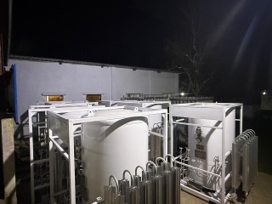
For a natural-gas well, the nitrogen injection pressure, rate, quantity, injection point and acceptance criteria cannot safely be selected from well depth alone — they depend on wellhead pressure, reservoir pressure, tubing / casing dimensions, completion configuration, wellbore fluids, MAWP, temperature and the intended operation. For high-pressure purging we raise pressure from 20 to 340 barg. Nitrogen may be generated from liquid nitrogen (LIN) and vaporized / pressurized as required, or supplied as high-pressure gaseous nitrogen.
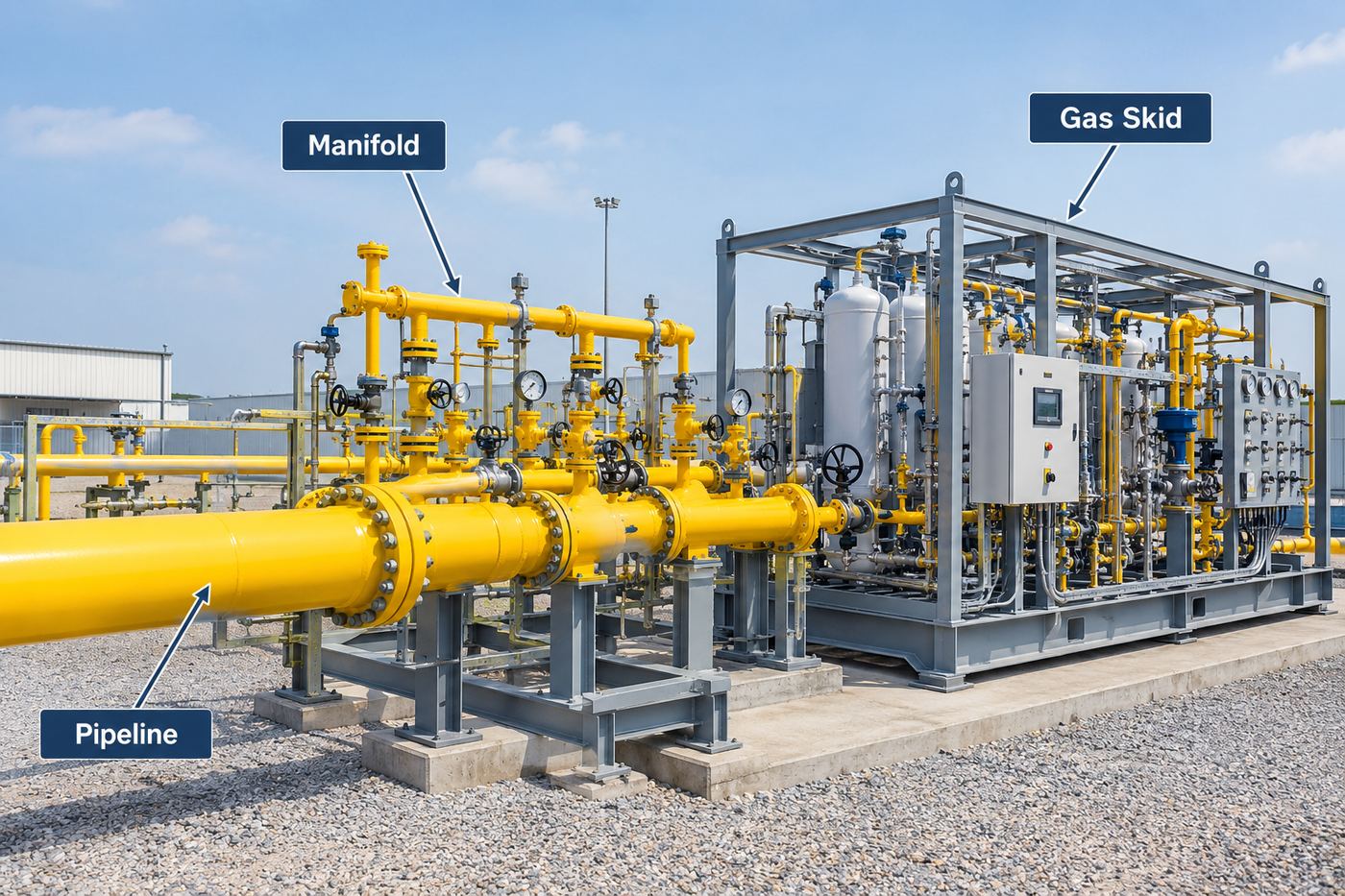
A high-pressure nitrogen system may include:
Low-pressure nitrogen purging removes oxygen, combustible gas, moisture or air from a pipeline or LPG vessel before commissioning, maintenance, shutdown or return to service. Nitrogen provides an inert atmosphere and reduces the risk of fire and explosion. For low-pressure purging we raise pressure from 0.5 to 12 barg; the actual purge pressure is established from the equipment design and operating procedure.
Typical sequence for an LPG / natural-gas pipeline:
For a line containing LPG, the vented LPG / nitrogen mixture is routed to a location where it cannot create an ignition or exposure hazard, and the purge pressure never exceeds the allowable pressure of the pipeline / tank or the rating of its weakest connected component.